

Why I'm Picky About My Supplements (And You Should Be Too)
I've Been Obsessed With Supplements Since Before It Was Cool
I'll be honest — I've been that person standing in the supplement aisle reading labels since I was a teenager. Health has been a lifelong passion for me, and early on I became convinced that what we put into our bodies matters — profoundly.
I've come a long way from buying EGCG green tea extract guaranteed to "burn belly fat" at the grocery store checkout line, or getting talked into hair and nail complexes that contain few, if any, ingredients clinically shown to support hair growth. From high-dose melatonin promising the "best sleep of your life" to daily concoctions of adaptogenic herbs meant to "melt away stress," I've tried it all. After a few decades of trial and error, I've developed a deeper sense of which supplements are foundational for my health, which may be helpful on an as-needed basis, and which ones to steer clear of entirely.
With that said, I'll never claim to know it all — there's no limit to the world of supplements, with new products, formulations, clinical trials, research, and regulations constantly changing the landscape. Most of my supplement knowledge comes from self-experimentation, a lot of reading research, listening to podcasts, and staying current on new studies and developments shared by health and wellness professionals (Dr. Rhonda Patrick is one of my go-tos). Honestly, supplements didn't get much attention during my healthcare college education — but I did gain a lot of valuable, practical knowledge through my Functional Medicine Coaching Academy certification.
From all of these sources, I've learned a few hard truths when it comes to supplements:
You can never "out-supplement" a poor diet. If you're eating like crap, supplements won't flush the toilet for you — you'll still be filled with **it.
There's no "cure-all," "guarantee," or "miraculous recovery" with supplements. They absolutely have an impact on the body, but they're not going to solve all your problems.
Quality matters 1,000% more than quantity. More is not always better.
Most importantly: where you buy your supplements matters just as much as what you're taking.
With that background covered, the rest of this post is a full breakdown of the supplements I actually take, why I take them, and why I stopped buying supplements from Amazon and similar big online retailers years ago. I'll also share where I've been sourcing my supplements for the last 10 years — Fullscript — and why I've partnered with them as a licensed healthcare professional. That partnership comes with an invite-only link for my readers to access the same products I use myself (and more) at a discount. :)
First: Does the Research Actually Support Supplements?
Yes — with nuance.
The honest answer is that supplements are not a replacement for a nutrient-dense diet, quality sleep, daily movement, and stress management. Supplements can be part of your daily health habits, but they shouldn't be your only healthy habit.
Having made that disclaimer (twice now), I can say that research generally supports the idea that targeted supplementation can meaningfully improve health outcomes, fill nutritional gaps created by modern farming and food processing, and support healthy aging when used strategically.
A few highlights of targeted supplementation and the research behind them:
Omega-3 fatty acids have extensive evidence supporting reduced cardiovascular disease risk, brain health, and reduced systemic inflammation — particularly important in modern diets that are heavily skewed toward omega-6 fats from processed food.
Vitamin D deficiency is estimated to affect roughly 42% of American adults, and low levels are associated with increased risk of autoimmune disease, cardiovascular disease, depression, and impaired immune function.
Magnesium is involved in over 300 enzymatic processes in the body, yet studies estimate that nearly half of Americans don't get enough through diet alone. Suboptimal magnesium is linked to poor sleep, muscle cramps, anxiety, and elevated blood pressure.
Creatine — typically thought of as a gym supplement — has an impressive body of research showing benefits for brain health, muscle preservation as we age, and cognitive function, not just athletic performance.
A quality multivitamin provides broad nutritional insurance for the gaps that even healthy eaters miss. A recent clinical trial in older adults found that a multivitamin modestly slowed certain biological markers of aging over two years.
The research supports strategic, targeted supplementation — not a cabinet full of products you half-remember to take. Consistency plays a major role.
The "Foundation First" Philosophy: You Don't Need a Lot
Here's my take after years of learning, reading, and experimenting on myself: most people need a solid, simple foundation — and then a few targeted additions based on their specific body and goals. If you're interested in learning more about my daily supplements, you can read a detailed post about it here or check out the brief overview below.
The core foundation I recommend for most adults (and take myself):
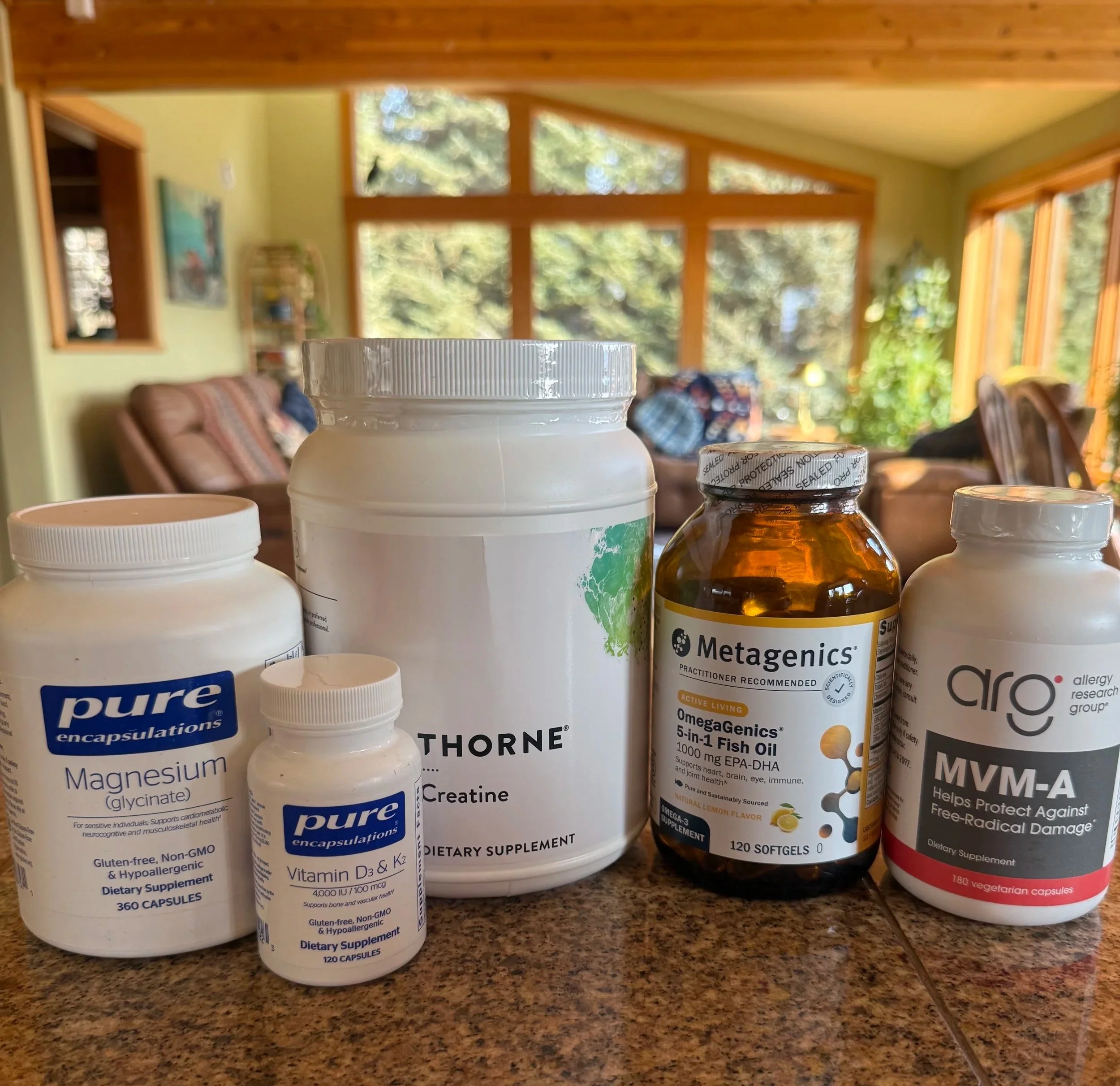
Omega-3s, EPA + DHA (fish oil) — for inflammation, brain, and heart health
Vitamin D3 + K2 — D3 for immune function and hormone support; K2 to help ensure calcium goes to bones, not arteries
Magnesium — for sleep, nervous system support, and muscle recovery (I prefer magnesium glycinate — it's gentle on the GI system)
A quality multivitamin — broad nutritional insurance with mineral support
Creatine — for brain health, muscle preservation, and cellular energy
Beyond the foundation, I'm a big believer in personalizing based on your individual needs — whether that's through symptoms, bloodwork (check out my recommended lab service here), or even DNA testing.
A great example: MTHFR gene variants. A significant portion of the population carries a variant in the MTHFR gene that impairs the body's ability to convert folic acid into its usable form (methylfolate). For these individuals, taking a standard folic acid supplement — even in a basic multivitamin — can actually be counterproductive. They need methylfolate specifically, along with methylated B12, to support proper methylation and neurological function. This is exactly the kind of nuance that gets missed when people just grab whatever is cheapest or most convenient.
Other examples of individualized supplement additions might include:
Iron — for women with heavy periods or confirmed deficiency on labs
Curcumin — to help relieve joint pain and inflammation
Adaptogens like ashwagandha — for HPA axis support during high-stress seasons
Probiotics — strain-specific, based on gut health goals
CoQ10 — for anyone over 40, or anyone on a statin medication
A simple foundation plus thoughtful additions = a smart supplement strategy. More is rarely better.
Now for the Part That Made Me Stop Buying Supplements on Amazon
I want to talk about something that genuinely concerns me as someone who has spent decades in the health and wellness world.
We have a supplement quality problem — and Amazon is at the center of it.
The Research Is Pretty Alarming
SuppCo (2024–2025) conducted one of the most eye-opening supplement investigations in recent memory. They purchased 44 of Amazon's top-selling supplements and sent them to ISO-accredited labs for independent testing. The results:
50% of supplements failed to meet their label claims
Of those failures, 90% contained only 0–3% of the main ingredient — meaning they were essentially inert
75% of gummy vitamins tested failed, many containing almost zero active ingredient
Every single overseas-registered supplement in the study failed — including all six from mainland China
One of the most memorable findings: a top-selling creatine gummy brand was so underdosed that you would need to consume 2,000 gummies to get the 5-gram dose listed on the label. Those products had 4.4+ star ratings and sold over 50,000 units per month. Wow.
That's not a supplement. That's expensive candy.
The FDA and Consumer Reports have also weighed in. In 2020, Consumer Reports covered FDA findings that 26 supplements purchased directly from Amazon contained undeclared pharmaceutical drugs — including sildenafil (the active ingredient in Viagra) — not listed anywhere on the label. These were weight loss and sexual enhancement supplements.
A 2022 independent study analyzed 30 immune support supplements sold on Amazon and found that 13 of them contained ingredients listed on the label that weren't even detected in the product. Nine contained undisclosed ingredients that weren't on the label at all.
Counterfeit brand-name products are also a growing problem. Reputable brands like Pure Encapsulations, Host Defense Mushrooms, and Regenexx have all publicly reported counterfeit versions of their products being sold on Amazon — using cheaper ingredients while trading on the brand's reputation. In 2023, someone was arrested for selling counterfeit Pure Encapsulations products on the platform.
Why Does This Happen?
Amazon is not a regulated marketplace. Anyone can become a seller. Millions of vendors operate there simultaneously, making real-time policing nearly impossible. There is no pre-market testing requirement for supplements — the FDA can only act after a product is on the market and harm has been reported. By then, thousands of people have already taken it.
The supplement industry in the U.S. is already lightly regulated compared to pharmaceuticals. Online marketplaces like Amazon, with countless individual sellers, amplify that problem significantly.
Why This Is More Than a Waste of Money
If you're taking a supplement that contains almost none of what it claims, you're not just wasting money — you may be falsely reassured that you're addressing a nutritional need when you're not. For something like methylated B12 in someone with an MTHFR variant, or vitamin D in someone who is genuinely deficient, that gap matters for your health.
And when products contain undisclosed ingredients — including pharmaceutical drugs — the risks are even more serious. Drug interactions, unknown dosing, adverse effects in people with underlying conditions — this is not hypothetical. The FDA has documented it repeatedly.
So, Where Do I Get My Supplements? Fullscript.
For almost a decade, my answer to "where do you buy your supplements" has been the same: Fullscript.
If you haven't heard of it, Fullscript is a professional supplement platform built for healthcare practitioners — doctors, naturopaths, nutritionists, and other providers — to recommend and dispense high-quality supplements directly to their patients. Access is through a provider’s unique dispensary link (mine is here) — follow the link to set up a free account and shop the same professional-grade supplements I use and trust.
Instead of a marketplace where anyone can list anything, Fullscript works directly with vetted brand partners and ships products through its own controlled supply chain directly to your door.

What Makes Fullscript Different
A few things stand out to me, especially after everything we just covered about Amazon:
Direct relationships with brand partners. Fullscript maintains 1:1 relationships with every brand in its catalog and lists authentic products obtained directly from the manufacturer — not from third-party resellers of unknown origin.
Annual cGMP recertification is required, not optional. Every single brand partner has to renew third-party cGMP (Current Good Manufacturing Practices) certification every year to remain in the catalog. This is described as a standard that's unmatched in the industry — and it's a stark contrast to Amazon, where, as we saw, even products from legitimate U.S.-registered companies routinely fail basic testing.
A clinician-led quality program. Fullscript has an in-house team of clinicians and quality experts overseeing brand vetting, facility standards, regulatory compliance, and adverse event reporting on an ongoing basis.
Third-party lab testing. Beyond the manufacturer's own quality control, Fullscript also tests select products through independent third-party labs to verify potency and purity, with "Enhanced Testing" badges in the catalog so you can see which products have gone through this extra layer.
NSF-certified distribution. Products are received, stored, and shipped from NSF-certified facilities with temperature and humidity controls — so what you receive hasn't been sitting in a random warehouse for who-knows-how-long.
After everything we covered about the state of supplements on Amazon, this is the difference that matters most to me: a real company standing behind every product on the shelf, year after year — not an open marketplace where anyone can list a “supplement.”
The Bottom Line
Supplements are a foundational piece of my personal health protocol — alongside everyday movement, a diet full of real whole food, and strategies that enhance my daily environment for wellness.
The caveat, however, is that supplements only work if they actually contain what the label says. And the research is increasingly clear that a significant portion of what's sold through online retail marketplaces — including Amazon — doesn't make the cut.
I've been using Fullscript for almost a decade, long before I ever thought about partnering with them. I became an affiliate because I genuinely believe everyone should have access to professional-grade, properly tested supplements — and I wanted to make that a little easier and more affordable for the people who read this blog. My storefront is stocked with the foundations I outlined above, plus options for more individualized needs, and using my link gets you a sizable discount on whatever you order. My final tip: Start with the foundation. Personalize from there. And buy from a source you can trust :)
References
Innes, J.K. & Calder, P.C. (2020). Marine Omega-3 (EPA and DHA) Supplementation and Cardiovascular Disease Risk. Marine Drugs, 18(11), 532.
Forman, J.P., et al. Vitamin D deficiency prevalence among U.S. adults — National Health and Nutrition Examination Survey (NHANES) data, Nutrition Research, 2011; 31(1):48-54.
Workinger, J.L., Doyle, R.P., & Bortz, J. (2018). Challenges in the Diagnosis of Magnesium Status. Nutrients, 10(9), 1202.
Forbes, S.C., et al. (2022). Effects of Creatine Supplementation on Brain Function and Health. Nutrients, 14(5), 921.
Loftfield, E., O'Connell, C.P., Abnet, C.C., et al. (2024). Multivitamin Use and Mortality Risk in 3 Prospective US Cohorts. JAMA Network Open, 7(6):e2418729.
Li, S., et al. (2026). Effects of multivitamin-multimineral supplementation on epigenetic aging (COSMOS trial). Nature Medicine, reported via Harvard Gazette and Scientific American.
SuppCo (2024–2025). "SuppCo Tested: What We Learned Testing 44 Supplements Purchased on Amazon.com." Independent lab testing retrospective. https://supp.co/articles/suppco-tested-2025-supplement-testing-retrospective(creatine gummy findings: https://supp.co/articles/suppco-tested-creatine-testing-results-gummies-failed-lab-analysis)
U.S. Food and Drug Administration, as reported by Consumer Reports (2020). "FDA Finds Hidden Drugs in Nearly 50 Dietary Supplements Sold on Amazon, eBay." https://www.consumerreports.org/health/fda-finds-hidden-drugs-in-weight-loss-sexual-enhancement-dietary-supplements-sold-on-amazon-ebay-a6199440119/
Crawford, C., Avula, B., Lindsey, A.T., et al. (2022). "Analysis of Select Dietary Supplement Products Marketed to Support or Boost the Immune System." JAMA Network Open, 5(8):e2226040. https://pmc.ncbi.nlm.nih.gov/articles/PMC9366544/
Fullscript. "Fullscript's High-Quality Supplement Program" and "Dietary Supplement Quality Assurance at Fullscript." https://fullscript.com/quality-program and https://fullscript.com/blog/fullscript-quality-assurance
*A Note From Well North Living: This post is for educational purposes only and isn't a substitute for individualized medical advice — please consult your healthcare provider before starting any new supplement or health protocol. This post may also contain affiliate links, including to my Fullscript dispensary; if you purchase through these links, I may earn a small commission at no extra cost to you. I only share products and brands I personally use and trust. Thanks for being here, and cheers to your health!
