

Why Trace Minerals Are Essential for Health (and Why Many People Are Deficient)
Why Minerals May Be the Missing Piece in Your Family’s Health
When people think about nutrition, they often focus on vitamins, protein, or calories. But one foundational piece of health is often overlooked: minerals.
Minerals are essential nutrients that support everything from hydration and energy production to immune health and bone strength. In fact, every cell in the body relies on minerals to function properly.
Yet many people today may not be getting enough of them.
Between filtered water, depleted soils, stress, and modern diets, mineral intake may be lower than it once was — which is why many functional wellness practitioners emphasize the importance of maintaining balanced mineral levels.

What Are Minerals and Why Do They Matter?
Minerals are inorganic nutrients that the body cannot produce on its own. That means we must get them through food, water, or supplementation.
According to the U.S. National Library of Medicine, minerals are necessary for keeping bones, muscles, heart, and brain functioning properly, and they are involved in producing enzymes and hormones in the body.
Minerals support many critical functions, including:
nerve signaling
muscle contraction
hydration and fluid balance
bone and teeth development
enzyme activity
immune system support
Research shows minerals play an important role in energy metabolism, neurological function, and immune responses, which means even mild deficiencies may affect overall wellness.
Why Many People May Be Low in Minerals
Several modern lifestyle factors can contribute to lower mineral intake.
1. Water Filtration Removes Beneficial Minerals
Many families use advanced water filtration systems to remove contaminants like chlorine, heavy metals, and pesticides. While this is beneficial for water purity, some systems — especially reverse osmosis (RO) filters — also remove naturally occurring minerals.
Research shows reverse osmosis filtration can remove up to 94–98% of calcium and magnesium from drinking water, leaving it significantly lower in mineral content.
Historically, natural spring water contributed meaningful amounts of minerals like:
calcium
magnesium
potassium
sodium
When water is heavily filtered, those minerals are often removed as well.
2. Soil Mineral Depletion
Modern agricultural practices can also influence mineral content in food.
Over time, repeated farming cycles and soil depletion may reduce the amount of trace minerals available in crops. While fruits and vegetables remain essential parts of a healthy diet, their mineral content may be lower than it was generations ago.
3. Stress, Exercise, and Sweating

Certain lifestyle factors may also increase the body's mineral needs.
These include:
heavy exercise
sweating
chronic stress
caffeine intake
alcohol consumption
All of these can increase the body's demand for minerals or contribute to faster depletion.
Electrolytes vs. Trace Minerals: What’s the Difference?
Electrolytes have become popular for hydration, especially in flavored powder form.
Common electrolytes include:
sodium
potassium
magnesium
These minerals are essential for fluid balance and nerve signaling. However, electrolytes represent only a small portion of the minerals the body uses.
The body also relies on dozens of trace minerals, including:
zinc
selenium
chromium
manganese
copper
silica
Even though trace minerals are needed in smaller amounts, they are still crucial for immune function, metabolism, enzyme activity, and cellular communication.
In other words:
Electrolytes support hydration — but trace minerals support the entire body.
Signs Your Body May Need More Minerals
Mineral imbalances can affect multiple body systems.
Some common symptoms associated with low mineral intake may include:
fatigue
muscle cramps
headaches
brain fog
poor sleep
low energy
weakened immunity
Minerals help regulate nerve signals, muscle contraction, and hydration. When levels are imbalanced, these systems may not function optimally.
Supporting Mineral Intake Naturally
The good news is that supporting mineral intake can be simple.
Focus on Mineral-Rich Whole Foods

Some foods naturally high in minerals include:
leafy greens
nuts and seeds
seafood
bone broth
sea salt
root vegetables
These foods provide minerals alongside other beneficial nutrients.
Consider Trace Mineral Supplementation
For families who drink filtered water or live active lifestyles, adding trace minerals back into the diet can be helpful.
One simple way to do this is through trace mineral drops added to drinking water.
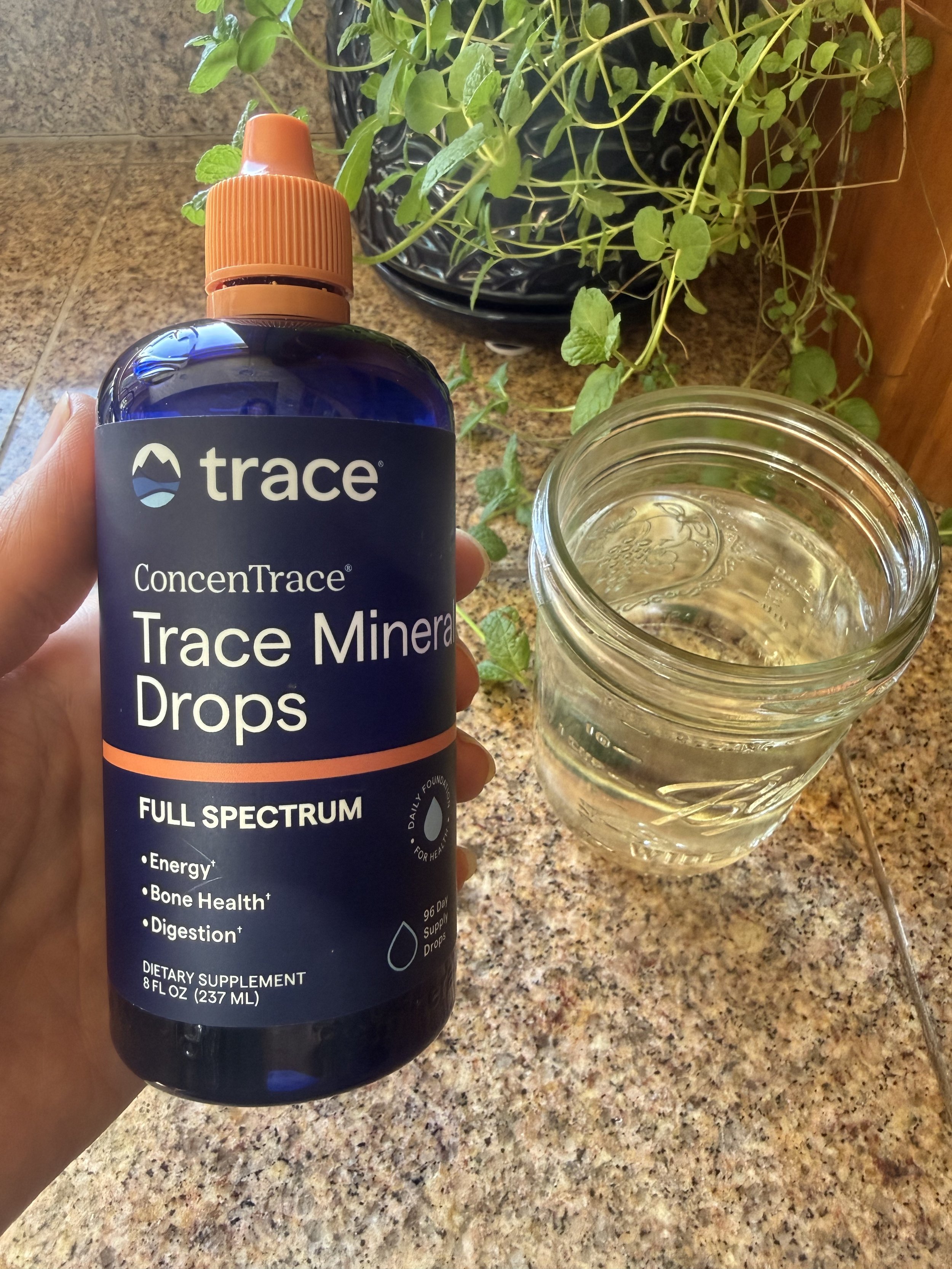
Our family uses Trace Mineral Drops from Trace Minerals Research, which provide a concentrated source of ionic trace minerals derived from natural sources.
These drops contain a broad spectrum of trace minerals that support:
hydration
electrolyte balance
energy production
overall cellular health
We like that they are easy to add to water (or any drink) and provide minerals that the body may be lacking.
👉 If you'd like to try the Trace Mineral Drops we use, you can find them through my Fullscript supplement dispensary.
Fullscript offers professional-grade supplements at discounted pricing compared to retail stores.

A Simple Habit for Everyday Wellness
Adding trace minerals to water can be a simple daily habit to support hydration and overall health.
Our family adds a few drops to:
morning water
coffee
smoothies
water bottles
This small step can help restore minerals that may be missing from filtered water and modern diets.
The Bottom Line: Minerals Are Foundational for Health
While vitamins and supplements often get the spotlight, minerals are truly foundational for cellular health.
They support hydration, nerve function, bone strength, immune balance, and energy production.
In today’s world of filtered water, soil depletion, and busy lifestyles, many families may benefit from paying closer attention to mineral intake.
For our family, focusing on whole foods, mineral-rich hydration, and trace mineral supplementation is one simple way we support everyday wellness.
References
U.S. National Library of Medicine. Minerals. MedlinePlus.
Razzaque MS. Minerals and Human Health. Nutrients.
Weyh C et al. The Role of Minerals in the Immune System. Nutrients.
Williams MH. Dietary Supplements and Sports Performance: Minerals. Journal of the International Society of Sports Nutrition.
Verma KC. Demineralization of Drinking Water: Is it Prudent?
Kamalapriya V et al. Health Risks from Low Mineral Drinking Water.
*A Note From Well North Living: This post is for educational purposes only and isn't a substitute for individualized medical advice — please consult your healthcare provider before starting any new supplement or health protocol. This post may also contain affiliate links, including to my Fullscript dispensary; if you purchase through these links, I may earn a small commission at no extra cost to you. I only share products and brands I personally use and trust. Thanks for being here, and cheers to your health!
